
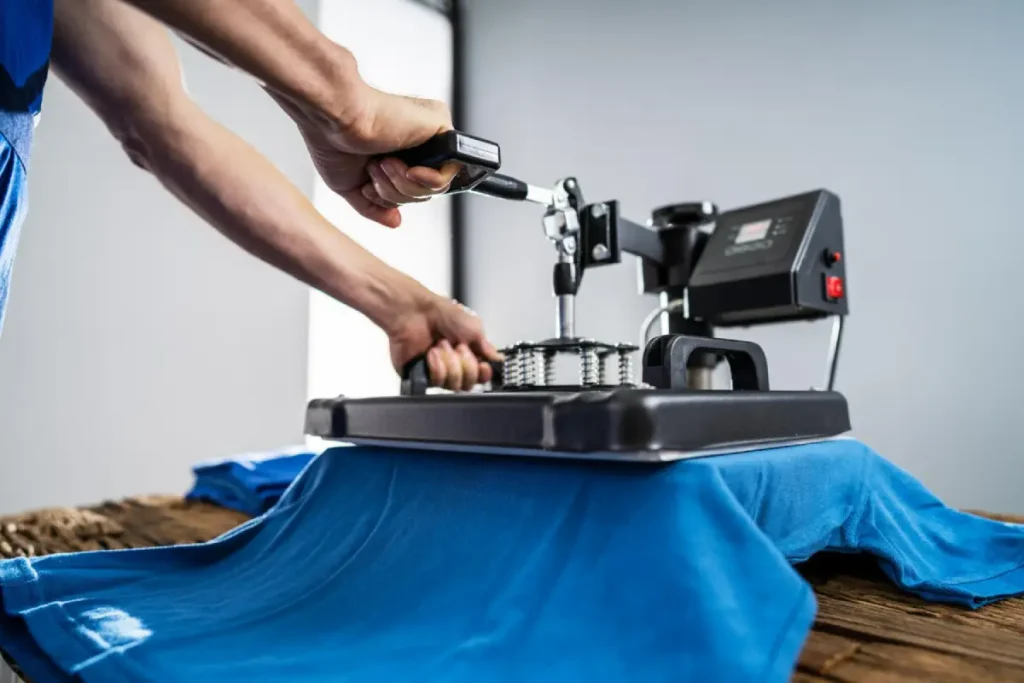
In the rapidly maturing apparel decoration market, the barrier to entry has shifted. It is no longer about who can buy the most expensive printer, but who can master the technical workflow of dtf production with the most consistency. As consumer demand for high-definition, retail-ready garments reaches new heights, print shop owners must move away from the “trial-and-error” mindset and embrace a protocol-driven approach to production.
The true power of dtf transfers lies in their ability to provide an engineered, high-resolution graphic that remains soft, stretchable, and vibrant on virtually any substrate. However, the difference between a garment that survives a hundred washes and one that fails in five often comes down to the microscopic interaction between the adhesive chemistry and the fabric weave. At Harwin, we advocate for viewing your production line as a precision assembly process where every variable—from moisture to pressure distribution—is calculated and controlled.
Engineering the Bond: Beyond the Heat Press
The biggest misconception in the industry is that the heat press is the only variable that matters. In reality, the success of your bond is largely dictated by the pre-application state of your textile. Many shops neglect the “pre-press” phase, which is essential for eliminating residual moisture and flattening the fabric fibers to create an optimal bonding surface. If you skip this, the steam trapped in your fabric will create a barrier that prevents the adhesive from ever fully locking into the fiber.
To operate at a premium level, implement a “Thermal Preparation” protocol. Every garment, regardless of material, should receive a 5-to-10-second pre-press to ensure the surface is dry, flat, and ready to accept the transfer. By normalizing your surface conditions, you remove the biggest variable in production failure, ensuring that every transfer you apply achieves maximum integrity from the very first second of contact.
The “Regional Production” Advantage
Supply chain latency is the silent enemy of the modern apparel brand. By proactively searching for dtf transfers near me, you aren’t just looking for a service provider; you are seeking an operational partner who can reduce your time-to-market. A high-quality regional printing house allows you to operate on an “as-needed” basis, which is the most effective way to protect your working capital and maintain high product variety without the risks of mass-inventory storage.
This proximity also enables a deeper technical integration. You can collaborate with your supplier to dial in specific “recipes” for your garment catalog, such as specialized ink density for heavyweight knits or optimized adhesive layers for performance synthetics. Harwin encourages this collaborative model because it transforms your business from a passive buyer into an active participant in your supply chain’s quality control, keeping your brand ahead of the generic competition.
Data-Driven Quality Governance
As you transition from artisan to manufacturer, your decision-making must be governed by data, not intuition. Elite apparel brands maintain a digital ledger of their “Technical Recipes.” This includes the specific PSI, dwell time, and temperature ramp-up profiles for every SKU in their shop. When you standardize these metrics, you effectively eliminate the possibility of human error and ensure that your quality remains identical whether you are pressing your first shirt of the day or your hundredth.
Furthermore, conduct objective durability audits on your own output. By taking a sample from each production run and subjecting it to aggressive “stress testing”—high-heat laundry and mechanical agitation—you gather the empirical evidence needed to stand behind your product. When you can market your apparel with the confidence of a wash-tested guarantee, you build an ironclad level of customer trust that justifies premium pricing and prevents the endless cycle of returns.
Frequently Asked Questions
Why is “cool-peel” the standard for professional results?
The cool-peel method allows the adhesive and ink to transition from a liquid to a solid state while still in contact with the fabric fibers. This “setting” period is critical for preventing the ink from lifting, which frequently happens if you attempt to peel while the adhesive is still in a molten, unstable state.
How do I identify a transfer provider who meets Harwin’s quality standards?
When searching for dtf transfers near me, look for shops that emphasize their “Curing Matrix.” A professional provider will be happy to discuss their automated oven calibration and will provide samples that feel supple, not rigid or “plastic-like,” upon stretching.
What is the most common cause of print “scorch marks” on synthetic fabrics?
Scorch marks occur when your press temperature exceeds the fiber’s thermal limit. Always use a dedicated digital thermometer to verify that your press platen matches its display settings, and use a lower-temperature adhesive powder specifically formulated for polyester and nylon.
How can I achieve the most consistent pressure across a large print?
Large prints are prone to pressure gaps. Always ensure your heat press is leveled correctly and consider using a “platen cover” or a specialized heat-transfer rubber mat to distribute pressure more evenly across the entire surface of the transfer.
Building a top-tier apparel brand is a journey of continuous technical refinement. By mastering the potential of dtf, you position your brand to compete at the highest level of the custom merchandise market. Harwin is committed to providing the industry insights you need to turn your production floor into a professional, profitable enterprise. Start optimizing your workflow today—your commitment to quality is the most valuable investment you can make for your brand’s future.