
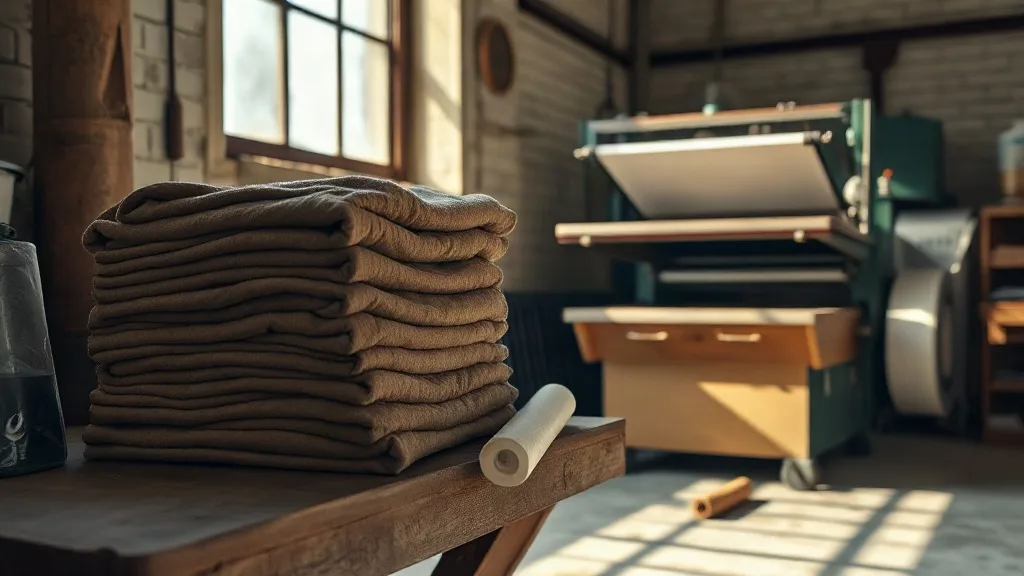
Most print shops treat garment choice as a purchasing decision and press settings as a production decision. In practice, the two are locked together. A blank that holds heat differently, grips the transfer film harder, or shifts weave under pressure will punish every shortcut in your workflow. That is why so many shops that run DTF transfers for a living gravitate toward shaka wear blanks: the fabric is heavy, the hand is consistent, and once you dial in your process, it stays dialed in across a full production run.
This guide is not about which blank looks best on a shelf. It is about what happens on the shop floor. How do you prep a heavyweight cotton tee so the transfer grabs without scorching? Where should the press settings land for a garment that thick? How does a heavier blank change the way you lay out a gangsheet? Below is a working answer to those questions, built around the realities of a busy print shop rather than a spec sheet.
Why Heavyweight Blanks Change the DTF Equation
DTF transfer film does not care about branding. It cares about heat, pressure, and how much moisture and texture it has to fight through to reach the fibers. A heavyweight cotton blank gives you more fiber density, which is good for durability but also means the heat has more material to travel through before it reaches the adhesive layer.
That single fact reshapes your workflow. On a light 4.5 oz blank, you can often get away with a shorter dwell and lighter pressure. On a 7 oz or 8 oz heavyweight, that same setup may leave the transfer sitting on the surface rather than bonded into the weave. The print looks fine coming off the press and starts peeling after three washes. Shops that run Shaka Wear consistently tend to treat it as its own press profile rather than borrowing settings from a lighter garment.
The fabric weight conversation
Shaka Wear blanks typically sit in the heavyweight range, and that weight is exactly why they hold up well for streetwear and workwear applications. The tradeoff is that you need more controlled heat and slightly longer dwell times to get a proper bond. If you have been pressing lightweight tees for years, expect a small recalibration period. It is not a problem. It is just physics.
Prepping a Heavyweight Tee Before the Transfer
The prep step is where most DTF failures actually begin, even though the failure shows up later. Heavyweight cotton holds moisture longer than thin jersey, and moisture is the enemy of a clean transfer. Here is the routine that works reliably on Shaka Wear blanks:
- Pre-press the garment. Give the shirt 5 to 8 seconds at press temperature with no transfer on it. This drives out residual moisture and flattens the weave.
- Check for sizing and finishing residue. New blanks sometimes carry a slight finish from manufacturing. A quick pre-press usually handles it, but if a shirt feels stiff or slick, press it longer.
- Lint roll the print area. Cotton sheds. A single fiber trapped under the film becomes a visible pinhole in the finished print.
- Let the garment cool slightly before placing the transfer. Placing film on a scorching surface can cause the adhesive to grab unevenly.
None of this takes more than a minute per shirt, and it prevents the majority of peel and crack complaints that come back weeks later.
Press Settings That Work on Shaka Wear Blanks
Exact numbers depend on your press and your film, so treat the following as a starting point and adjust from there. The pattern is what matters: heavier fabric, slightly more heat and time, firm but even pressure.
Temperature
Most DTF films want a press surface between 300°F and 320°F. On heavyweight cotton, stay toward the upper end of that range unless your film manufacturer specifies otherwise. Lower temperatures on a thick blank often mean the adhesive never fully activates, which produces a transfer that looks bonded but releases in the wash.
Dwell time
Start around 12 to 15 seconds for the main press and extend if you see edge lifting. Heavyweight blanks benefit from the extra few seconds because the heat has more material to penetrate. If your press has a pre-press cycle, use it.
Pressure
Medium to firm, applied evenly. You want the film pressed into the weave, not crushed into it. Too little pressure and the transfer sits on top of the fabric texture. Too much and you can flatten the hand of the print or cause the adhesive to bleed beyond the design edge.
Peel temperature
Follow your film's instructions, but on heavyweight cotton a warm peel tends to give cleaner edges than a cold peel, because the adhesive is still slightly pliable. Pull at a consistent angle and speed across the whole design. Inconsistent peeling is one of the most common causes of cracked transfers on thick blanks.
Planning Gangsheets Around Heavyweight Blanks
Once your press profile is stable, the next efficiency lever is layout. A DTF Gangsheet Builder lets you pack multiple designs onto a single sheet, and that matters more than it sounds when you are running heavyweight blanks at volume. Heavyweight shirts take slightly longer per unit on the press, so any time you save in film handling translates directly into throughput.
A few layout habits that pay off:
- Group by garment size. If a run is mostly large and extra large, group those designs together so your press operator is not resetting the platen constantly.
- Leave real margins. Tight nesting saves film but leaves no room to trim cleanly, and a ragged edge on a heavyweight shirt is more visible than on a thin one.
- Batch by color complexity. Designs with fine detail benefit from being grouped so you can check registration and powder application on a consistent set.
- Keep a test corner. If you are trying a new film or a new blank weight, include one small test design in the corner of the gangsheet to verify the press profile before committing the full run.
The Mistakes That Cost Print Shops Money
After enough production runs, certain failure patterns show up again and again. Most of them are avoidable with a small process change.
Borrowing settings from a lighter blank
This is the big one. A press profile tuned for a 4.5 oz tee will under-cure a heavyweight blank. Build a separate profile for Shaka Wear and label it on the press so nobody swaps it by accident.
Skipping the pre-press
It feels like an extra step until you calculate the cost of a reprint. A few seconds of pre-pressing eliminates moisture-related failures across an entire batch.
Overloading the platen
Heavyweight shirts are bulky. Stacking them or folding the hem under the platen creates uneven pressure, and uneven pressure means uneven adhesion. One shirt at a time, laid flat.
Ignoring wash testing
Run one finished shirt through a home wash cycle before you ship a large order. It takes a day and tells you more about your press profile than any spec sheet. If the edges lift, extend dwell time or raise temperature slightly and test again.
Frequently Asked Questions
Do heavyweight Shaka Wear blanks need a different DTF press setting than standard tees?
Yes, in most cases. Heavyweight cotton is denser, so heat takes longer to reach the adhesive layer. Expect to run slightly higher temperature or a few extra seconds of dwell time compared to a lightweight jersey blank. Always verify with a wash test before committing to a large run.
Can I use the same gangsheet layout for heavyweight and lightweight blanks?
The layout itself can be the same, but the press profile cannot. Keep your gangsheet design consistent and change only the press settings between garment types. Mixing garment weights within a single press session is where inconsistency creeps in.
Why does my DTF transfer peel off Shaka Wear shirts after washing?
Peeling almost always traces back to incomplete adhesive activation. Common causes are insufficient dwell time, temperature too low for the fabric weight, uneven pressure, or moisture trapped in the garment before pressing. Pre-press the shirt, raise the temperature slightly, and extend dwell time by two to three seconds, then wash test again.
How many shirts can I press per hour on heavyweight blanks?
Throughput depends on your press, your layout, and your operator, but heavyweight blanks generally run slower than light tees because of the extra dwell time and bulkier handling. Batching designs by size on your gangsheet and pre-pressing shirts in groups are the two biggest levers for recovering that time.
Is DTF a good match for Shaka Wear streetwear blanks in general?
It is a strong match. DTF handles the textured surface of heavyweight cotton well, produces fine detail without screens, and holds up to repeated washing when the press profile is correct. The key is treating heavyweight blanks as their own production category rather than an afterthought.